A detailed case study on implementing V-VAC EnMS for real-time energy monitoring, demand control, time-of-day analysis, and cost optimization in an industrial facility.
The Challenge
Before implementation, energy data was reviewed mainly through monthly utility bills and occasional meter readings. This reactive approach meant that inefficiencies were identified only after costs were already incurred. The facility lacked visibility into time-of-day consumption, peak demand behavior, and zone-wise energy distribution, making it difficult to control demand charges and optimize usage patterns. Energy planning and forecasting were also major challenges. Without historical trends and granular data, the management could not confidently predict future bills or evaluate the impact of operational changes. Manual data consolidation introduced delays and inconsistencies, while the absence of alerts meant abnormal consumption often went unnoticed until it resulted in higher energy bills. Key challenges faced by the facility: No real-time visibility into energy consumption and demand Inability to analyze time-of-day and zone-wise energy usage Limited insight into demand peaks and cost drivers Manual data handling leading to delays and inaccuracies No automated alerts for abnormal energy behavior
Our Solution
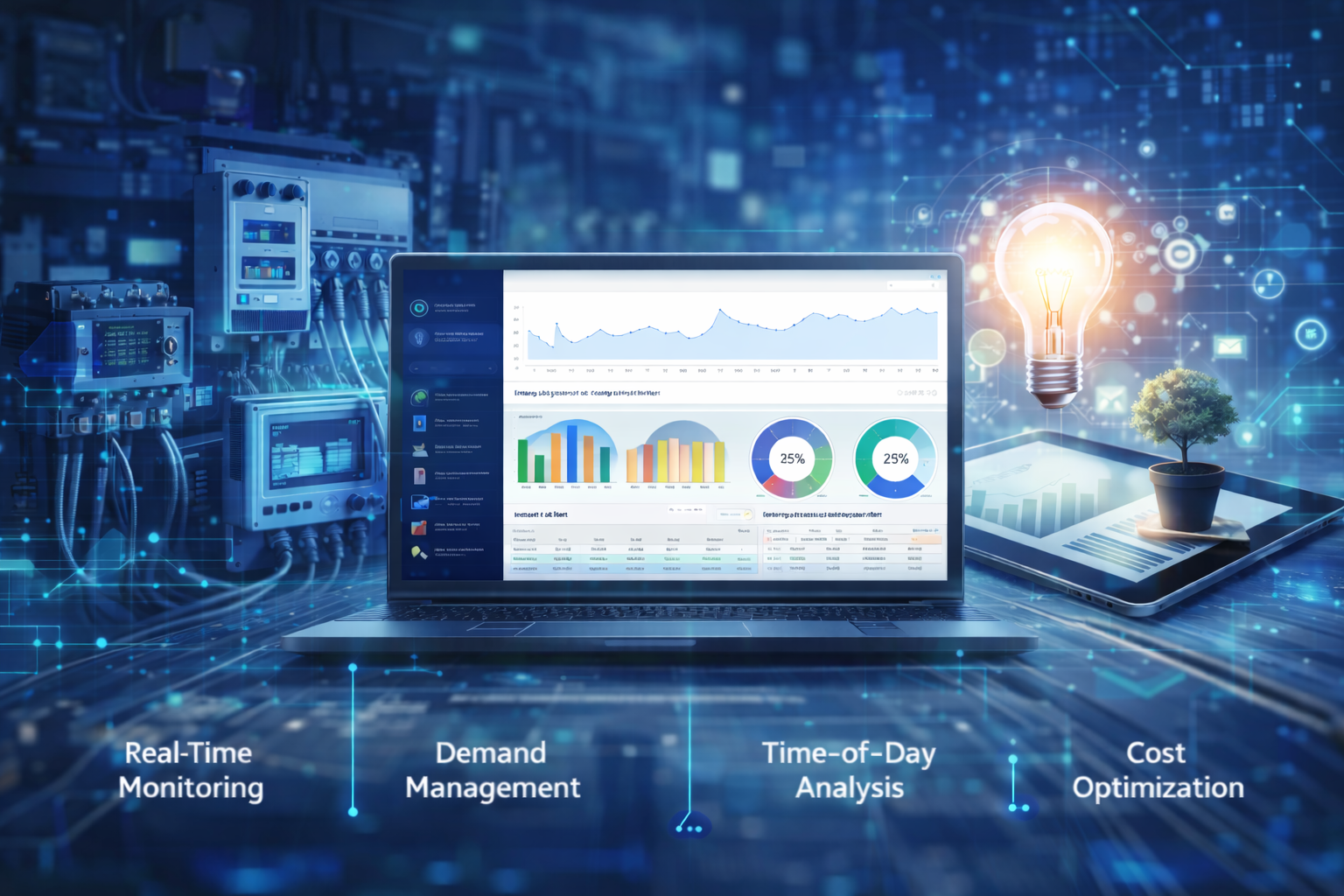
V-VAC Smart Energy Management System (EnMS) was implemented to provide a comprehensive, real-time view of the facility's energy usage. The platform was integrated seamlessly with existing energy meters, ensuring minimal disruption and rapid deployment. All energy data was securely collected and visualized through a centralized web-based dashboard. The system enabled continuous monitoring of energy parameters, demand levels, and consumption trends. Advanced analytics provided time-of-day insights, zone-wise distribution, and historical comparisons, allowing the facility to understand not just how much energy was consumed, but when and where it was used most intensively. Automated reports and instant alerts ensured that deviations were identified immediately, enabling timely corrective actions. Key elements of the implemented solution included: Integration with existing energy meters, independent of brand Real-time energy monitoring through a centralized dashboard Time-of-day energy analysis for cost-effective load planning Demand monitoring to avoid peak penalties Automated reports in Excel and PDF formats Instant alerts via email and WhatsApp for abnormal conditions
Key Results
The implementation delivered measurable improvements across operations, efficiency, and cost reduction:
Following implementation, the facility gained complete transparency into its energy consumption. Real-time dashboards allowed management and engineering teams to track energy usage continuously and correlate it with operational activities. Demand peaks and high-cost periods were clearly identified, enabling smarter load scheduling and improved demand control.
Energy cost forecasting became more accurate through historical trend analysis and consumption comparisons. Manual reporting efforts were significantly reduced, while data accuracy and reliability improved. The facility transitioned from reactive energy monitoring to proactive energy management, resulting in better financial control and improved operational discipline.
Key outcomes achieved:
Improved visibility into real-time and historical energy consumption
Better control over demand peaks and penalty charges
Enhanced ability to plan operations based on time-of-day tariffs
Reduction in manual data collection and reporting effort
Faster identification of energy inefficiencies and corrective actions
The implementation of V-VAC EnMS transformed energy data into a strategic asset for the facility. By combining real-time monitoring, advanced analytics, and automated alerts, the solution empowered the client to take informed, proactive decisions on energy usage. The system not only helped control energy costs but also laid a strong foundation for continuous improvement and Industry 4.0–aligned energy management practices.
Overall impact of the solution:
Shift from reactive to proactive energy management
Data-driven decision-making for energy optimization
Scalable platform ready for future expansion
Strong foundation for sustainability and cost control initiatives